China Best Window Types Which One Is Right for You

Time:2026-11-11 Author:Mason
0%

Choosing among China’s window types is not merely a style decision. It affects comfort, daylight, ventilation, noise, and operating costs. In a Shanghai apartment, a sealed, well-insulated window may matter more than a wide opening. In a humid southern home, airflow and protection from driving rain may matter more. The right choice depends on climate, room, orientation, and building design. Not always obvious.

The International Energy Agency’s 2024 Global Status Report for Buildings and Construction estimates that buildings and construction account for about 32% of global energy demand and 34% of energy- and process-related CO₂ emissions. These figures cover more than windows, but they show why the building envelope deserves attention. The U.S. Department of Energy also reports that windows can account for roughly 25–30% of residential heating and cooling energy use in the United States. That is useful context, not a direct forecast for Chinese homes.

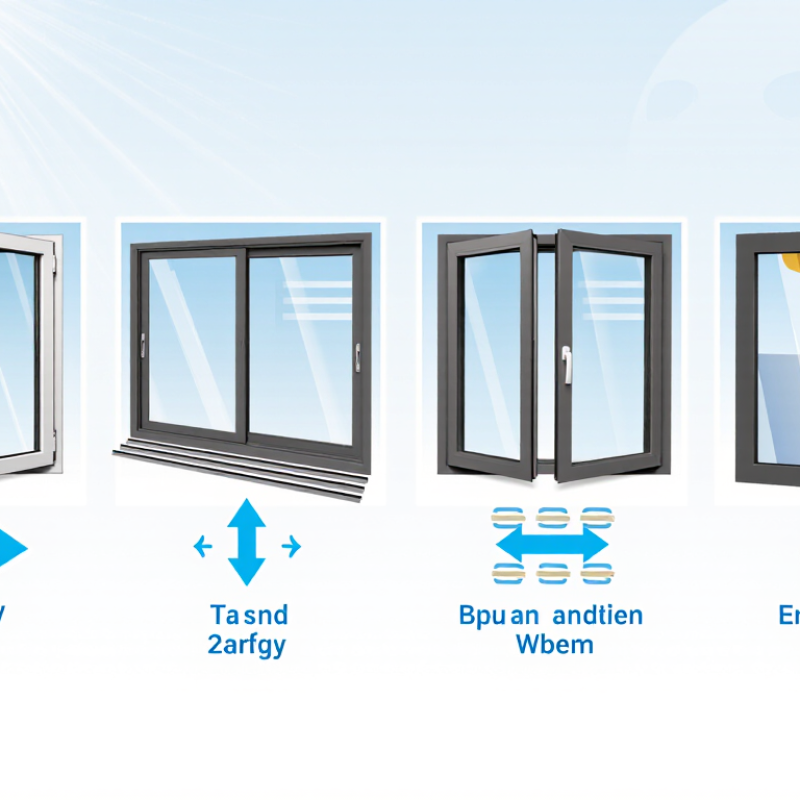
This guide compares casement, sliding, tilt-and-turn, and fixed windows, along with frame materials and glazing options. It considers thermal performance, weather sealing, cleaning, security, and installation quality. Labels alone are not enough. A premium frame can still disappoint if it is poorly fitted; that detail is easy to overlook. “Window Right” means matching performance to local conditions, budget, and daily habits—not simply choosing the most expensive product. Verify specifications and installer experience before deciding.
China Best Window Types Which One Is Right for You

Start with China’s Climate Zones and GB 50176 Thermal-Design Requirements

China’s climate zones should guide window selection before appearance or price. GB 50176-2016 divides China into thermal-design zones, including severe-cold, cold, hot-summer/cold-winter, and hot-summer/warm-winter regions. These conditions change the balance between insulation, solar gain, and shading. In severe-cold areas, low heat-transfer windows and well-sealed frames help limit winter heat loss. In hot-summer/cold-winter regions, both winter insulation and summer shading matter. No universal winner.

The code provides a thermal-design framework; it does not prescribe one best window type for every building. Designers should check the project’s applicable energy-efficiency standard, window U-value, solar heat-gain performance, orientation, and installation details. A south-facing room may benefit from winter sun, while strong afternoon sun can make external shading important. Small air leaks matter, too. They are often missed. IEA’s 2023 tracking report estimates that buildings accounted for about 30% of global final energy consumption in 2022, underlining why envelope choices deserve careful attention. That figure is global, not China-specific. A practical specification should match local climate data and the actual façade; selecting glass by headline performance alone can leave a cold edge at the sill or an overheated room by late afternoon.

China Best Window Types: Which One Is Right for You?

Start with China’s Climate Zones and GB 50176 Thermal-Design Requirements

Lower U-factor means less heat transfer. Values shown are indicative examples for whole-window systems, not GB 50176 limits; actual performance varies with frame, glazing, spacer, and window size. GB 50176 divides China into severe-cold, cold, hot-summer-and-cold-winter, hot-summer-and-warm-winter, and mild climate zones. Severe-cold and cold locations generally benefit from highly insulating windows; hot-summer zones also need attention to solar heat gain and shading. Check the applicable local building-energy requirements when specifying a window.

Compare Casement and Sliding Windows Using GB/T 7106 Performance Tests

Casement or sliding? The answer depends on exposure, room layout, and tested performance. GB/T 7106-2019 evaluates windows for air permeability, watertightness, and resistance to wind pressure. These tests offer a clearer comparison than frame style alone.

Casement windows close against compression seals, which can help limit air leakage when fitted and adjusted correctly.

Sliding windows save space and suit openings beside counters or walkways, but their moving joints need careful sealing.

Neither design wins automatically. Ask for the tested window’s actual performance results, not just a claim that it meets the standard. Check the test specimen’s size and configuration, too; results may not transfer directly to a different installation.

The U.S. Department of Energy estimates that heat gain and loss through windows account for 25–30% of residential heating and cooling energy use. This is a U.S. estimate, not a China-specific prediction, but it shows why airtightness matters.

In practice, inspect the corner seals, drainage paths, and locking points. A strong test report can still disappoint if installation leaves gaps. Details matter.

One limitation: laboratory testing cannot capture every site condition.

Evaluate U-Factor and SHGC with NFRC Window-Rating Metrics

When comparing window types in China, look beyond frame material and opening style. The NFRC label reports U-factor and solar heat gain coefficient (SHGC) using standardized test conditions. A lower U-factor generally means less heat passes through the whole window. That can help keep a room warmer on a cold morning. SHGC estimates how much solar heat enters through the glass. A lower value may reduce overheating in a sunlit room, while a higher value can provide useful winter warmth.

Not always.

Climate and window orientation change the trade-off. A south-facing room in a hot region may benefit from lower SHGC, while a shaded north-facing window has different needs. Compare ratings for similar window sizes and configurations; glass-only figures are not the same as whole-window performance. A casement window may seal differently from a sliding one, but installation quality also matters. Even a strong rating cannot compensate for gaps around the frame. Check the label, then consider shade, exposure, and how the room is used. It is easy to overfocus on one number.

That is worth reconsidering.

Match Awning, Tilt-Turn, and Fixed Windows to Ventilation and Space Needs

Awning, tilt-turn, and fixed windows solve different problems. Choose by asking where air should enter and what an open sash might obstruct. An awning sash hinges at the top and projects outward, so it can provide ventilation without taking up indoor floor space. It suits a kitchen above a counter or a bathroom with limited room. Still, wind-driven rain can enter, so the opening is not weatherproof.

Tilt-turn windows offer two modes: a small inward tilt for gentle airflow, or a full inward swing for cleaning and stronger ventilation. That swing needs clear floor space; curtains, furniture, or a narrow walkway can get in the way. Space is tight. Fixed windows have no moving sash, so they provide daylight and views but no direct ventilation. Pairing one with an operable window can preserve the view while adding airflow.

Window choice also affects energy performance. The U.S. Department of Energy’s Energy Saver guidance estimates that heat gain and heat loss through windows account for about 25%–30% of residential heating and cooling energy use. That figure is not a ventilation rating, and actual performance depends on glazing, installation, climate, and use. Check opening dimensions and hardware in person; a window that looks practical on a plan may feel awkward beside a real desk or sink.

Check Air, Water, and Wind-Pressure Resistance Before Selecting a Window

Choosing a window by frame material alone can miss the main risks. Air leakage affects comfort, while wind pressure and rain exposure challenge the whole assembly. The U.S. Department of Energy estimates that windows account for 25–30% of residential heating and cooling energy use. A leaky unit can make a room feel drafty beside the frame, even when the glass is efficient. Small details matter.

Check the air-leakage value and its test method. NFRC 400 measures air leakage at 1.57 pounds per square foot, or 75 Pa; lower reported leakage generally means a tighter window under that test. This is useful, but not a promise of performance in every building. I would not trust one impressive number on its own. Check the label.

For wind and water, look for test results under standards such as ASTM E330 for structural performance and ASTM E331 for water penetration. Compare the tested design pressure and water rating with local requirements and the building’s exposure. A coastal home, a high-rise corner, and a sheltered suburban wall do not face the same loads. Even a well-rated window may leak if the sill flashing or installation is poor. That part is easy to overlook.

China’s Best Window Types: Which One Is Right for You? Check Air, Water, and Wind-Pressure Resistance Before Selecting a Window

The comparison below shows typical performance potential for properly designed and installed windows. These are qualitative comparisons, not certified ratings; actual results depend on the complete window system, dimensions, hardware, glazing, installation, and test results.
Window Type How It Opens Air-Tightness Potential Water-Tightness Potential Wind-Pressure Resistance Potential Best Suited For Key Selection Checks
Fixed window Does not open Excellent potential; no operable sash joints Excellent potential with suitable glazing seals and perimeter installation High potential; glass, frame, and anchoring must be sized for the design pressure Views, daylight, and areas where ventilation is not needed Confirm glass specification, frame reinforcement, perimeter sealing, and safe cleaning access.
Casement window Hinged sash opens inward or outward High potential; closing sash can compress weather seals High potential when the sash, seals, drainage, and installation are properly designed Good to high potential; depends on sash size, hardware, frame, and anchoring Ventilation and relatively strong sealing in many climates Check locking points, hinge capacity, gasket continuity, drainage paths, and outward-sash exposure to strong gusts.
Tilt-and-turn window Tilts inward at the top or swings inward on side hinges High potential with continuous compression seals and correctly adjusted hardware Good to high potential when closed and correctly installed Good potential; confirm tested performance for the selected size and configuration Flexible ventilation, easier interior cleaning, and secure closed operation Check hardware load limits, sash adjustment, opening clearance, and child-safety requirements.
Sliding window One or more sashes slide horizontally or vertically Moderate to good potential; performance depends on interlocks, pile seals, and sash adjustment Moderate to good potential; track drainage and water-management design are important Good potential when frame, sash, and meeting rails are engineered for the required pressure Limited space, wide openings, and areas where a swinging sash would obstruct circulation Inspect track drainage, interlocks, rollers, weather seals, and tested air and water performance.
Awning window Hinged at the top and opens outward from the bottom Good to high potential with compression seals and secure locking Good potential; the projecting sash can help shed rain, but wind-driven rain still requires testing Moderate to good potential; sash size and exposed position affect loads Ventilation during light rain and higher-level openings Check operator and hinge capacity, maximum opening size, locking, and local wind exposure.
Single- or double-hung window One or both sashes slide vertically Moderate to good potential; depends on sash seals and balance-system design Moderate to good potential with effective sill drainage and weather seals Good potential when appropriately sized and reinforced Traditional façades and openings where outward projection is not suitable Check meeting-rail seals, balance hardware, drainage, and ease of maintenance.
How to compare products: Ask for test reports for the complete window assembly, not just the glass or frame. In China, GB/T 7106-2019 specifies testing and classification for air permeability, water tightness, and wind-load resistance of building exterior windows and doors. Match the tested size and configuration to the project, and check that installation details meet local design requirements.

FAQS

Which window type is better for limiting drafts, casement or sliding?

Casement windows press against compression seals when closed. Sliding windows save space, but their moving joints need careful sealing. Neither is automatically better.

What should I check in a window performance report?

Check air leakage, water resistance, and wind-pressure results. Confirm the tested window’s size and configuration match the one you plan to install.

What does a lower U-factor indicate?

It generally means less heat passes through the whole window. It may help a room stay warmer on a cold morning.

What does SHGC tell me?

It estimates how much solar heat enters through the glass. A lower value may help reduce overheating in a sunny room. Not always.

How should window orientation affect my choice?

A sunny room in a hot region may benefit from lower solar heat gain. A shaded window has different needs, so compare the room’s exposure and use.

How do I compare air-leakage figures?

Compare results tested using the same method. One cited method measures leakage at 75 Pa; lower leakage generally means a tighter window under that test.

What wind and water test details matter?

Check the tested design pressure and water rating against local exposure. A coastal wall, high-rise corner, and sheltered wall face different conditions.

Can a strong test rating guarantee a draft-free room?

No. Poor installation can leave gaps around the frame, and weak sill flashing can allow water entry. Check the corner seals, drainage paths, and locking points. It is easy to overlook the installation.

Conclusion

Choosing the Window Right for your home starts with understanding China’s climate zones and the thermal-design requirements in GB 50176. A window that suits a cold region may not be the best choice for a hot, humid area. Compare casement and sliding designs by considering their operation, ventilation, and performance results under GB/T 7106 tests. U-factor and solar heat gain coefficient (SHGC), assessed using NFRC rating metrics, can also help you weigh heat transfer against solar gain.

Next, match the window style to the room: awning windows can provide ventilation during light rain, tilt-turn designs offer flexible opening options, and fixed windows suit spaces where airflow is not needed. Before selecting a product, check its tested air infiltration, water resistance, and wind-pressure performance, then consider how those results align with your climate, building conditions, and everyday needs.


Mason

Mason

Mason is a seasoned marketing professional with a deep expertise in the company's offerings and a passion for driving brand awareness. With a strong background in digital marketing strategies, he has an innate ability to connect with diverse audiences and effectively communicate product benefits.......