Aluminium Sliding Door Replacement can look like a simple frame swap. In practice, the final price depends on the opening, glazing, hardware, access, and installation work. A standard-size door may fit an existing opening; a custom unit or damaged sill can add substantial labor. Removal and disposal matter, too. Small details count.
The U.S. Department of Energy reports that heat gain and loss through windows account for about 25%–30% of residential heating and cooling energy use. That figure covers windows broadly, not the savings guaranteed by replacing one sliding door. Still, it explains why glass type, weather seals, and installation quality belong in the cost discussion. A lower quote may exclude trim repairs, upgraded locks, or disposal. Ask for those items in writing.
For a renovation perspective, architect Carl Elefante, FAIA, former president of the American Institute of Architects, is widely quoted: “The greenest building is the one that is already built.” His remark is not a door-pricing rule. It is a useful reminder to compare repair and replacement before committing. Sometimes replacement makes sense; sometimes it does not.
A reliable estimate should identify the door dimensions, glass specification, frame finish, labor, and any repair allowance. Get comparable written quotes. Check what each one leaves out. A neat estimate can still be wrong. The sections that follow explain the main cost drivers and the questions to ask before ordering.
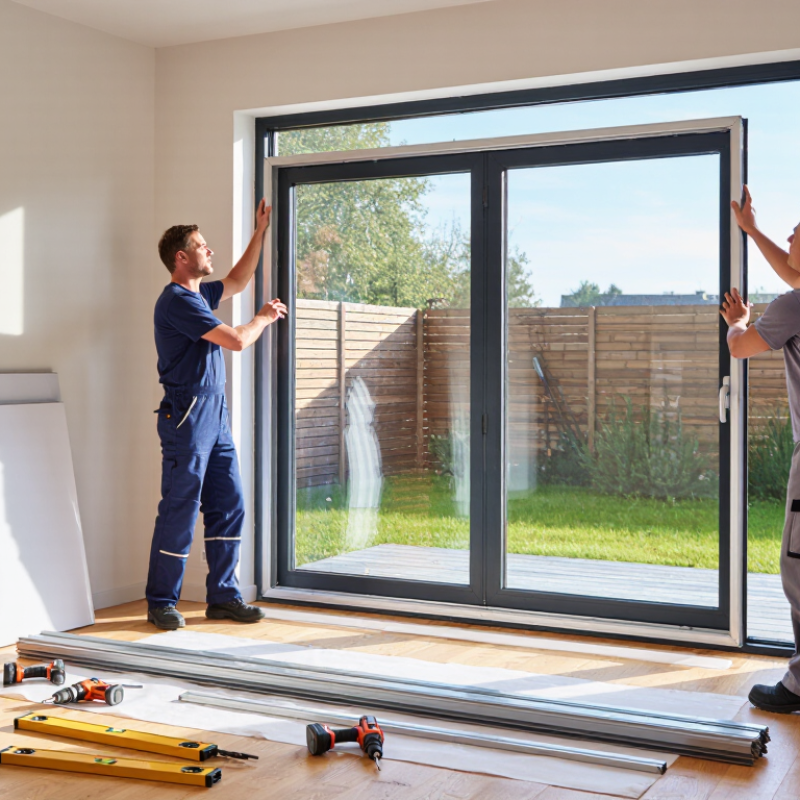
What Determines the Cost of Aluminium Sliding Door Replacement?
The door’s size and layout are major cost factors. A wide opening with two moving panels usually needs more material and fitting time than a standard single-panel design. Glass choices matter, too. Double glazing, safety glass, or tinted panes can change the quote, as can thicker frames and custom colours.
The existing opening may need attention. After the old frame is removed, an installer might find damp timber, uneven masonry, or gaps around the sill. These repairs are easy to overlook before removal. Access also affects labour: carrying a large glazed panel up narrow stairs takes longer than fitting one at ground level. Disposal and making good the interior trim may be listed separately, so check the estimate.
Hardware and finish add further variation. Locks, rollers, handles, and drainage details differ in quality and complexity. Ask for an itemised quote that separates the door, installation, removal, and any repairs. A site measurement is more reliable than a price based on rough dimensions alone. Small details matter. Even so, estimates can miss hidden damage; confirm how unexpected work will be priced before fitting begins.
Indicative U.S. price ranges in USD. Actual quotes vary by location, door specifications, site conditions, and contractor. Installed ranges include typical labor unless noted otherwise.
| Cost factor | What can affect the price | Typical cost or price impact |
|---|---|---|
| Door size and configuration | A standard two-panel door generally costs less than a wider three- or four-panel unit. Non-standard dimensions may require a custom order. | $1,200–$2,800 installed for many standard two-panel replacements; larger configurations can be $2,000–$4,500 or more. |
| Frame and finish | Frame thickness, thermal-break construction, and specialty or custom-colour finishes can change the unit price. | Often adds about $100–$600 compared with a basic frame and standard finish. |
| Glazing and energy features | Double glazing, Low-E coatings, gas fills, and improved thermal performance may cost more than basic glass. Local energy requirements may also affect the specification. | Typically adds about $150–$700, depending on the glass package and door size. |
| Safety and privacy glass | Tempered or laminated glass may be required or preferred near doors and in other locations specified by local building codes. Tinted or obscure glass may also increase the price. | Often adds about $100–$500; the amount depends on the glass type and area. |
| Hardware and security | Locking systems, handles, rollers, and other hardware vary in quality and design. Multi-point locks or upgraded hardware can increase the cost. | About $50–$350 for common upgrades. |
| Removal and disposal | The old door must be removed and the materials taken away. Difficult access or unusually heavy units may increase labor and disposal charges. | Often $150–$500. |
| Opening and frame repairs | Rot, water damage, uneven framing, or damaged trim around the existing opening may need repair before installation. | About $200–$1,500; extensive repairs can cost more. |
| Structural changes | Widening or raising the opening can require framing work, engineering, and additional finishes. This is separate from a like-for-like replacement. | Often $500–$2,500 or more, depending on the scope. |
| Labor and installation access | Installation time can rise when access is limited, the door is oversized, the site requires special protection, or interior and exterior finishes need additional work. | Labor is commonly included in installed estimates; confirm whether finishing and cleanup are included in the quote. |
| Permits and local requirements | Permit requirements and fees vary by city and project scope. Code-related glass or energy requirements may affect the selected door. | Permit fees may range from about $50–$300 or more, where required. |
| Typical replacement budget | A like-for-like replacement with a standard-size door and no major opening repairs is usually less expensive than a custom or structural project. | Budget roughly $1,200–$4,500 for many standard installations; custom doors, larger openings, or substantial repairs may exceed this range. |
Door size, glazing, frame type, installation access, and local labour rates all affect the price. Wider openings may need stronger frames and extra support.
A broad U.S. estimate is about $1,200 to $7,000. Treat it as a benchmark, not a local guarantee. Custom sizes can cost more.
Ask each installer to price the same door size, finish, glazing, locks, removal, disposal, and finishing work. Compare itemised quotes. Small details matter.
Measure the opening in several places and photograph the existing frame. Older walls may be uneven, and a few millimetres can affect fitting.
Yes. Double glazing usually costs more than single glazing. Laminated or specially coated glass may add expense, so consider the room and local climate.
Slim frames can admit more daylight, while thicker or thermally improved frames may offer different insulation performance. Ask for details, not assumptions.
Confirm whether measuring, delivery, trim repairs, taxes, old-door removal, and disposal are included. I once assumed trim was included. It was not.
Yes. A damaged sill or hidden water ingress may only become visible after removal. Keep a contingency. Check twice.
Aluminium Sliding Door Replacement costs can vary widely depending on the size and configuration of the opening, the quality of the door, and the work required. Standard replacement doors may fall within a different price range from larger or custom-sized options. Glazing choices, such as double glazing or upgraded glass, and frame finishes or specifications can also affect the overall estimate.
The total budget should account for more than the door itself. Removing and disposing of the existing unit, preparing the opening, installation, and any additional repairs or finishing work may add to the cost. To compare quotes fairly, check what materials and services each estimate includes, ask about possible extra charges, and consider both product quality and installation requirements. Planning for a contingency can also help cover unexpected work discovered during replacement.

 Guoxin