Choosing the top Aluminum French Doors requires more than admiring slim frames and wide glass panels. A door may look elegant beside a stone patio, yet leak air around its sill. It may open smoothly, yet deliver weak thermal performance.
The U.S. Department of Energy reports that windows can cause 25–30% of residential heating and cooling energy use. French doors create similar concerns because their larger glazed areas expose interiors to heat gain, drafts, and condensation. The International Energy Agency also reports that buildings consume roughly 30% of global final energy. These figures make frame design, glazing, weather seals, and installation quality important—not decorative details.
As building-science expert Joseph Lstiburek says, “A window is a hole in the wall.” The same principle applies to glazed doors. The best Aluminum French Doors should combine durable aluminum, thermally broken frames, low-emissivity glass, reliable multipoint locks, and tested air and water resistance. Look for NFRC ratings, U-factor data, solar heat-gain information, and independent testing. Do not trust appearance alone.
There is no universal winner. Coastal homes need corrosion resistance. Cold climates need stronger insulation. Sunny rooms may benefit from lower solar heat gain. Installers also matter; a perfect door can fail when the threshold is poorly flashed.
This guide compares leading options through performance, design, security, maintenance, and installation value. The judgment will not be flawless. Product specifications change, regional availability differs, and marketing language can blur meaningful differences. That uncertainty deserves attention.
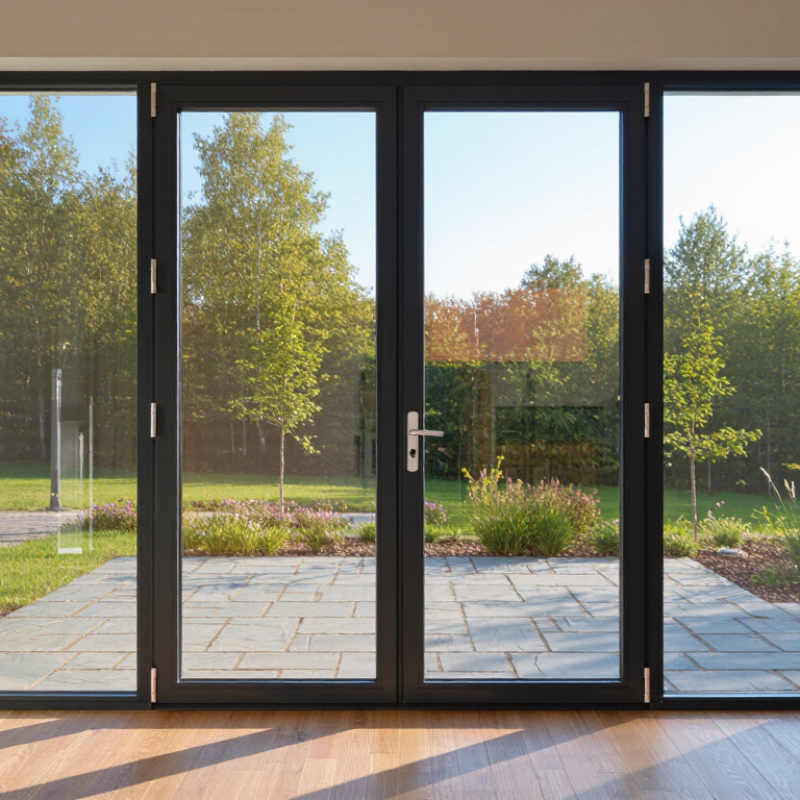
A quality aluminum French door is defined by structure, not appearance alone. It usually has two hinged door leaves meeting at the center. Each leaf should operate smoothly without scraping the sill. The frame must remain rigid under repeated opening, closing, and seasonal movement.
Thermal performance matters. Aluminum conducts heat efficiently, so a thermal break separates the interior and exterior frame sections. This reduces direct heat transfer through the metal. The U.S. Department of Energy estimates that windows can account for 25–30% of residential heating and cooling energy use. French doors contain larger glazed areas, making glass selection especially important. Low-emissivity coatings, insulated glazing, and properly sealed edges can improve comfort near the doorway.
The National Fenestration Rating Council evaluates products through U-factor and solar heat gain coefficient ratings. Lower U-factor generally indicates better insulation, while SHGC shows how much solar heat enters. A higher SHGC may help in colder climates but increase overheating in sunny rooms. Local exposure matters more than sales language. The International Aluminium Institute reports that recycled aluminum requires about 5% of the energy used for primary aluminum production, supporting material efficiency when recycled content is verified. Hardware also defines a reliable door: adjustable hinges, corrosion-resistant fasteners, and a secure multipoint lock improve long-term use. I would not assume every “thermally broken” frame performs equally. Installation gaps, weak drainage, and uneven floors can still cause drafts. Small gaps matter.
A narrow frame may look elegant, but it can transfer heat quickly without a thermal break. A thermal break separates conductive aluminum sections. This improves indoor comfort and can reduce condensation near cold edges. Looks can mislead.
Check the U-factor, solar heat gain coefficient, visible transmittance, and air leakage. A lower U-factor generally indicates better insulation. Solar heat gain should match your climate and opening direction. Maximum performance is not always ideal.
A south-facing opening may need stronger solar control. A shaded northern opening may benefit from higher daylight transmission. Consider nearby trees, walls, and seasonal sunlight. Orientation changes everything.
Look for a raised threshold, continuous gasket, and reliable drainage path. These details can reduce drafts and water entry during heavy rain. Check whether the sill directs water away from the interior floor. Small parts matter.
Measure width, height, squareness, and sill depth at several points. Take measurements near both corners and the center. Uneven masonry can cause leaks, even with a well-designed door. The opening comes first.
The multipoint lock should engage smoothly without forcing the handles. Weatherstripping should compress evenly where the two panels meet. Compare hinge adjustment range and inspect whether the panels remain aligned. I might overlook hinges.
No. Recycled aluminum can require much less production energy than primary aluminum. However, recycled content does not prove stronger insulation or better installation. Also compare frame design, glass performance, drainage, and tested durability. One figure is not enough.
Ask for tested air, water, and structural performance under recognized fenestration standards. Review installation tolerances, warranty coverage, adjustment procedures, and replacement-part availability. Test a display door by opening it slowly and checking handle resistance. A showroom test helps, but it cannot reveal every installation problem.
Aluminum French Doors combine the classic symmetry and welcoming appearance of French-style entryways with the strength and practicality of aluminum framing. They are defined by paired panels, generous glass areas, and a central opening that can create a broad connection between indoor and outdoor spaces. Key features may include slim profiles, durable finishes, energy-efficient glass, secure locking systems, smooth hinges, and low-maintenance surfaces. These elements help the doors provide natural light, ventilation, and a refined architectural appearance without requiring frequent upkeep.
When comparing top Aluminum French Doors, consider frame quality, glass performance, weather resistance, operating comfort, security, and available sizes. Before choosing a model, check the installation opening, wall structure, drainage, threshold height, and local climate requirements. The best design should also match the room: inward-opening doors may suit interior spaces, while outward-opening options can work well for patios or gardens. Color, handle style, panel proportions, and glazing choices should complement the surrounding architecture while supporting everyday use.

 Guoxin