When searching for "Cheap Window Aluminium Sliding Suppliers," global procurement officers are often looking for the sweet spot between cost-efficiency and architectural-grade quality. China has established itself as the global hub for aluminum fenestration due to a vertically integrated supply chain. Unlike localized manufacturers who rely on imported profiles, top-tier Chinese factories control the entire process from smelting primary aluminum billets to precision extrusion, thermal break assembly, and surface finishing (anodizing, powder coating).
This operational model allows for significant cost reductions while maintaining rigorous ISO 9001:2015 standards. By minimizing middleman markups and optimizing logistics through major port proximity, we provide high-performance sliding window solutions that meet international building codes (ASTM, EN, AS/NZS) at prices 30-40% lower than traditional European or North American manufacturing benchmarks.
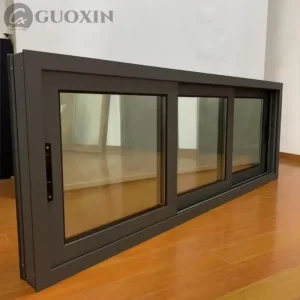
Modern sliding systems now incorporate "broken bridge" (thermal break) technology, separating the interior and exterior aluminum frames with polyamide strips to prevent heat transfer, essential for LEED-certified buildings.
The rise of automated sliding windows integrated with smart home ecosystems (sensors for weather, auto-closing mechanisms) is the new standard in residential luxury projects.
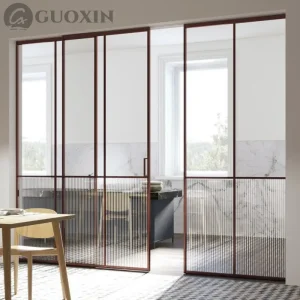
Ultra-slim profile designs (narrow sightlines) are in high demand, maximizing natural light and offering panoramic views, requiring high-strength alloys to maintain structural integrity.
Navigating international procurement requires more than just a competitive price. Large-scale construction projects demand supply chain consistency and compliance verification. Our approach focuses on:
It is not about cutting corners. It is due to massive economies of scale, direct access to raw aluminum markets, and optimized, labor-efficient manufacturing processes.
We use ISPM-15 compliant heat-treated wooden crates with custom foam interleaving, ensuring zero breakage for containerized international freight.
Depending on complexity and volume, production usually spans 25-45 days, with an additional 20-30 days for ocean freight, allowing for predictable project scheduling.





 Guoxin